
Guides / How fragrance development works, step by step
How fragrance development works, step by step
From the first brief to the final bottle. What a perfumer actually does, how fragrance modifications work, and the decisions you need to make along the way.
Quick answer
Updated 26 Sep 2026 · 4 min read
Fragrance development is the process of turning an idea into a finished, reproducible scent. It starts with a creative brief, moves through formulation and several rounds of evaluation, and ends with stability testing, regulatory checks and production approval. At Studio 3003BC, fragrance development typically takes 4–6 weeks. A complete private-label perfume project, including packaging and manufacturing, generally takes 12–16 weeks, with several activities running in parallel.
Here is what happens between the first conversation and the finished perfume.
- 4–6 weeks
- Fragrance development at Studio 3003BC
- 12–16 weeks
- A complete private-label project, including packaging and manufacturing
- Up to 3
- Rounds of fragrance modifications
Chapter 01
Creating the olfactive direction
Translating your vision into scent.
The perfumer develops an olfactive direction using aromatic ingredients and accords — combinations of materials that create a particular scent impression.
A perfume is commonly described through three stages:
Stage 01
Top notes
The first impression, often citrus, fresh or aromatic.
Stage 02
Heart notes
The fragrance’s central character, often floral, spicy or fruity.
Stage 03
Base notes
The longer-lasting impression, often woods, musk, amber or vanilla.
These notes work together as the fragrance evolves on the skin.
The objective is to create a distinctive, balanced composition that reflects the brand’s identity.
Chapter 02
Developing the first formula
Where creativity meets chemistry.
The perfumer begins combining natural extracts and synthetic aroma molecules to create the fragrance.
Each ingredient contributes something different: freshness, depth, texture, diffusion or longevity.
A formula may contain dozens of materials, carefully balanced to produce the desired character.
Even a small adjustment can dramatically change the result.
The first working formulas are then prepared for evaluation.
Chapter 03
Evaluating fragrance modifications
The first version is rarely the final one.
Mod
In perfumery, a mod is a modification or working version of a fragrance formula.
A perfumer may present several mods, each exploring a different interpretation of the brief.
For example, a woody fragrance might be developed in three directions:
Mod A
Fresh, citrus-led and airy.
Mod B
Warm, smooth and woody.
Mod C
Richer, with deeper amber notes.
Fragrances should be evaluated on blotters and skin, immediately after spraying and over several hours.
01 · Immediately after spraying
Opening
02
Development
03 · Over several hours
Dry-down
The opening, development and dry-down are all important.
Chapter 04
Refinement, finalisation and testing
Perfecting the fragrance for production.
Once a preferred mod is selected, the perfumer refines the formula based on feedback. Adjustments may include reducing sweetness, enhancing woody notes, improving diffusion or balancing the dry-down.
Round
01
Round
02
Round
03
Then
Approval
After approval, the fragrance concentrate is blended into the intended finished-product formulation at the selected concentration.
The finished perfume then undergoes relevant stability, packaging compatibility and regulatory checks, including applicable IFRA Standards and market-specific requirements.
Check 01
Stability
Check 02
Packaging compatibility
Check 03
Regulatory
Including applicable IFRA Standards and market-specific requirements
The objective is to ensure the fragrance not only smells right but is also suitable for consistent commercial production.
05 · FAQ
Frequently asked questions
Do I need perfumery knowledge to create a fragrance?
No. You need a clear understanding of your brand, customer and product positioning. The perfumer handles the technical formulation.
Can I use an existing perfume as a reference?
Yes. Reference fragrances help communicate your preferences and guide the development of a fragrance for your brand.
Can we start with a smaller quantity to test the market?
Yes. Using catalogue bottles, minimums start at 1,500 units per fragrance. Custom glass raises the minimum because of mould costs.
How many fragrances should I launch with?
A collection of three to five well-differentiated fragrances can be a practical starting point for a new perfume brand.
Will my fragrance last eight to ten hours?
Longevity depends on ingredients, concentration, skin and environmental conditions. Performance goals should be discussed during development and evaluated through testing.
How do you handle compliance?
Every formula is checked against the current IFRA standards and labelled to Indian regulations. Export labelling can be prepared for your target markets.
Work
Who have you made private label perfume for?
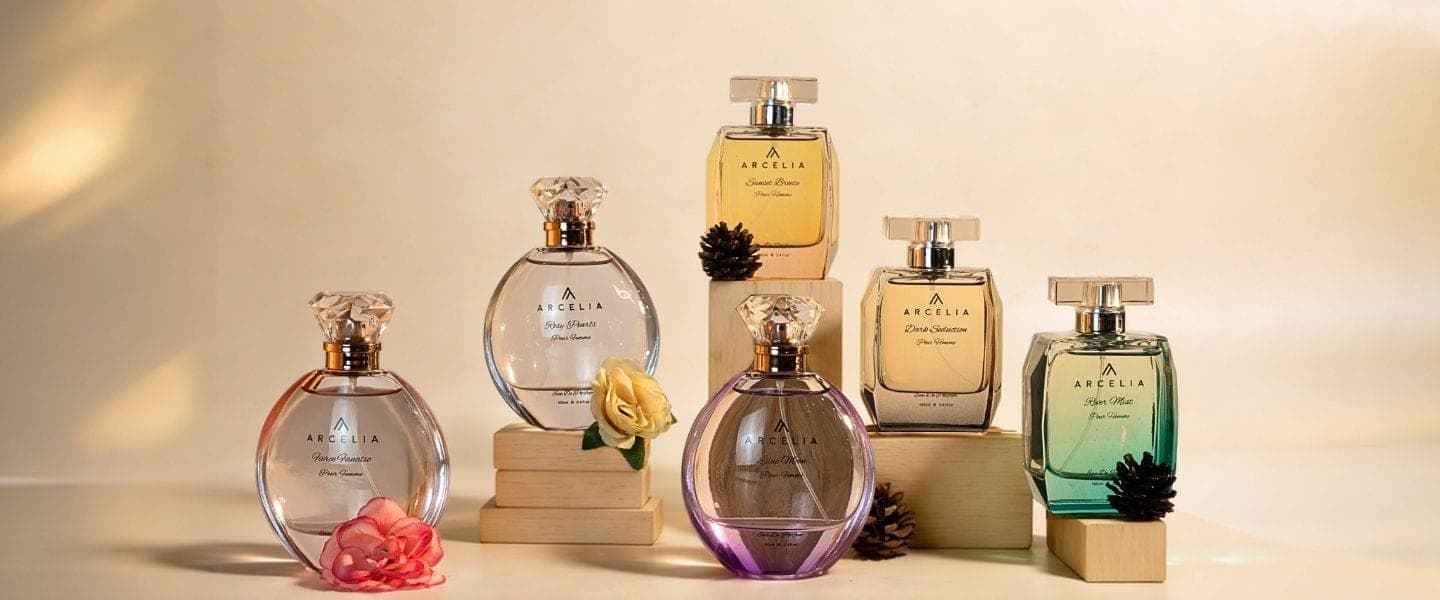
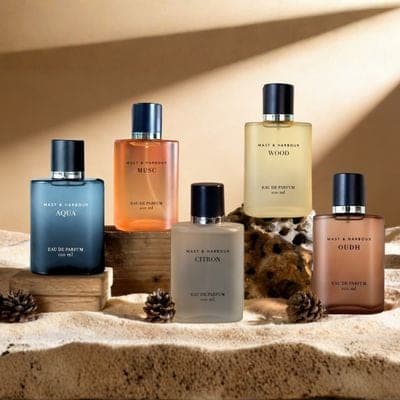
Brands & retailers
Ready to create your own fragrance?
At Studio 3003BC, we bring fragrance creation, packaging, compliance and manufacturing together under one roof in Gurgaon.
From the initial brief to the finished bottle, we help brands transform their ideas into market-ready perfumes.